
Tribal Knowledge Is the Reason Your Automation Project Stalled.
The project was going well until the builder asked what happens when the order is under the minimum, or the customer is on hold, or the part is on.
59 posts tagged Automation, newest first.

The project was going well until the builder asked what happens when the order is under the minimum, or the customer is on hold, or the part is on.
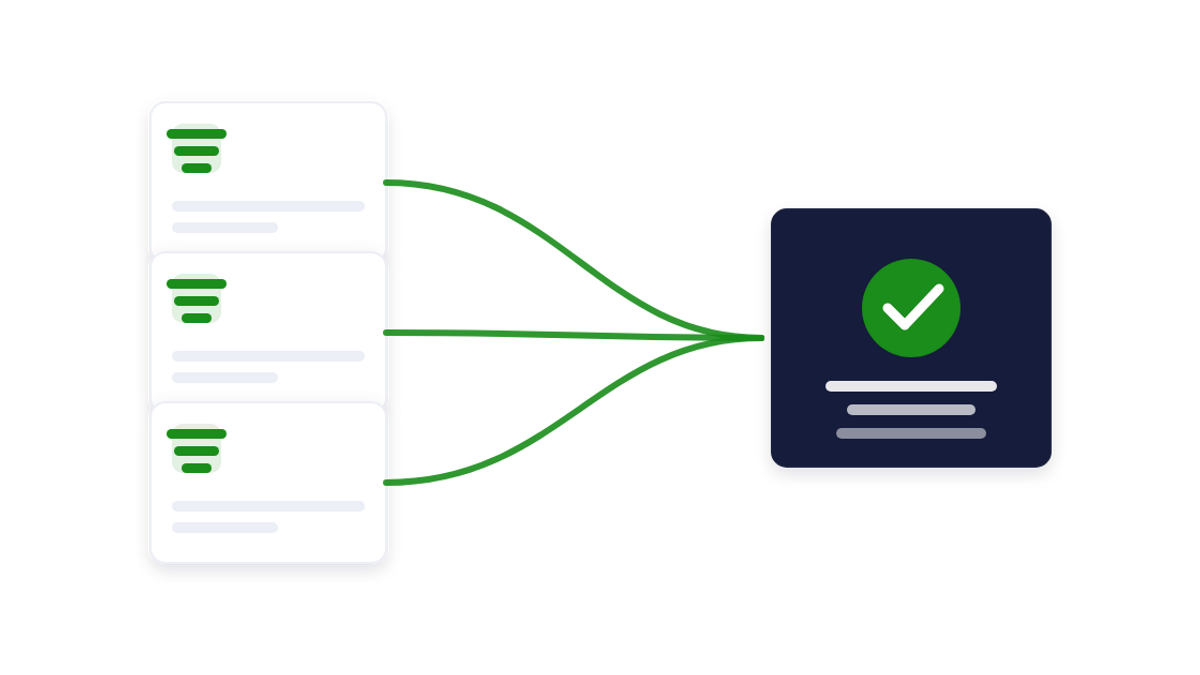
The demos show an agent inside one application. The money is in an agent that reads the sales system, the help desk and the ledger together and acts.

Most companies already automate. A rule fires when a field changes.

Zoho sells two products that both send email and both talk to the CRM, and most teams pick one for the wrong reason. The difference is not features. It is what the team is trying to run.

Every quarter someone proposes buying a tool to fix the documentation problem, and every quarter the documentation stays unwritten. The tool was never the missing piece. Three other things are, and none of them is for sale.

Most workflow documentation describes the day nothing went wrong. That day does not need documenting; the people who do the work already know it. What they know and never write down is what happens on every other day, and that is the part an automation has to read.

When a company asks for two systems to sync both ways, it is almost always asking for something else: permission not to decide which system owns the record. The sync will run. What it will do to the data is the subject of this post.

Marketing automation is a loaded phrase. Half of it means rules that fire on a trigger. The other half now means a model deciding what to do. On a Zoho estate the two are different layers, and knowing where one ends is the whole implementation.

Every application in your order-to-cash chain works. The cash still arrives late, because the four handoffs between quote, order, shipment and payment are email, re-keying and a spreadsheet. What breaks at each one, what it costs in days of sales outstanding, and where to start.

Most companies buy marketing as headcount or a retainer and judge it on activity. We run ours as a governed system and know its all-in cost per piece. Here are the numbers, what they leave out, and how to read them against a hire or an agency.

CodeStringers announces AI Marketing OS, a governed, AI-operated marketing system built on Zoho, with a person approving every dollar before it is spent.

Automation projects in the mid-market rarely fail at the tooling. The tools work. Workflow rules fire on schedule, integrations move records, agents call APIs and get answers back. The stall happens earlier and quieter than that, usually in a room, when somebody finally asks: what should the system do when the order is over fifty thousand dollars, the customer is thirty days past due, and the rep says it's fine because there's a signed renewal coming? Nobody answers. Or three people answer...
"Something isn't working." "We're outgrowing our tools." "We're afraid to make the wrong move." No-Risk Discovery is a short, practical conversation that gets you clarity before you commit to anything big. We'll tell you if we're a fit. If we're not, we'll tell you that too.