
Configure or build.
Where the platform’s native capability ends and custom code has to start. Getting this line wrong in either direction is the most expensive mistake available to you.
A fractional CTO from CodeStringers owns the technical shape of your integrated business solution — what gets configured, what gets built, what gets retired, and what it costs to run. Backed by a team that executes the decisions, and by an estimate we guarantee.
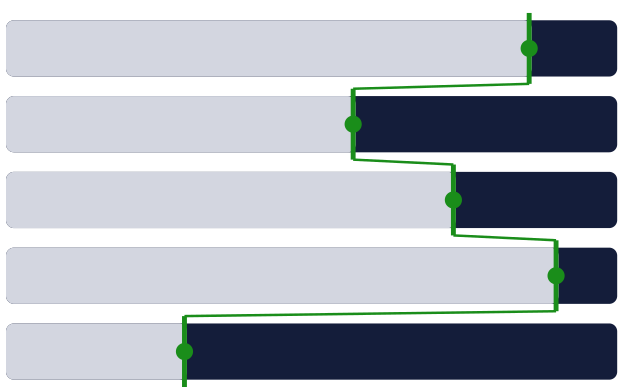
Most technology spending is committed long before anyone writes a cheque. It is committed the moment someone chooses to build rather than configure, or picks a system of record, or accepts an integration pattern that will need a person watching it forever. A fractional CTO exists to make those five calls deliberately.
Where the platform’s native capability ends and custom code has to start. Getting this line wrong in either direction is the most expensive mistake available to you.
How systems exchange data, what happens when one is down, and whether a failed sync is visible or silent.
Which system is authoritative for each entity. Unresolved, this becomes monthly reconciliation work that never goes away.
What you are carrying, what it costs per month, and which parts are worth paying down versus living with.
Whether the team you have can build what the roadmap assumes, and what to do about the gap.
This is the failure mode we see most often in mid-market technology leadership, and it does not look like a failure while it is happening.
A capable engineering leader, asked to own software, does what good engineering leaders do: reduces coupling, favors what the team can maintain, builds the clean thing. Every individual call defensible. The aggregate result is a technology estate optimized for the engineering team and misaligned with how the business books revenue.
An integrated business solution has to be led from the operating model down, not the codebase up. The question is never “what is the best architecture.” It is “what is the best architecture for the way this company sells, delivers and invoices” — and answering that requires someone who is in the room for both conversations.
That is why we do not sell this role standalone. Our fractional CTOs sit on top of the same integration and implementation practice that builds the systems, so the architecture decision and the delivery reality are held by one organization.
One CTO, not a rotating bench. They learn your business once and keep it.
Weekly working sessions with your leadership, plus availability between them. The time commitment is set to your business, not sold in fixed blocks.
Sequenced, estimated, and tied to business outcomes rather than a platform roadmap.
Implementation, integration and Managed Technical Operations under the same commitments. Retainer clients get a project plan with the full cost of a release before committing to it.
A full-time mid-market CTO in the United States is a total-compensation commitment in the low-to-mid six figures, plus recruiting, plus the risk that the first hire is wrong. Fractional engagements are a fraction of that, scaled to the hours the role actually requires — for most of our clients that is somewhere between a half day and two days a week.
We do not publish a rate card, for one reason: the honest number depends on how much system you have and how much of it is currently undecided. What we will commit to before you spend anything is a scoped engagement with a guaranteed estimate. If we are wrong about the scope, we absorb the difference.
If you are covering a vacancy until a permanent hire starts, you want someone optimizing for the handover. We are not built for that, and we will tell you so on the first call.
If the direction is already set and the constraint is capacity, buy delivery. Adding a leadership layer to a staffing problem makes it slower.
A single well-run system with no integration surface does not need an architect. It needs good administration.
A chief technology officer who holds the role permanently but works part of the week — typically a half day to two days. Unlike an interim CTO, there is no permanent successor being recruited, so the engagement is built to last rather than to be handed over.
Less than a fraction of full-time total compensation, because you are buying the hours the role requires rather than a headcount. The exact figure depends on the size of your systems estate and how many architectural decisions are currently unmade. We scope it during no-risk discovery and guarantee the estimate.
An interim CTO covers a vacancy and optimizes for a clean handover to the permanent hire. A fractional CTO holds the role on an ongoing basis and optimizes for the system still working in three years. The difference shows up whenever a shortcut and a durable answer diverge.
The common trigger is not a technology event. It is the point where business decisions start stalling on technology questions nobody is authorized to answer — usually somewhere between three and a dozen connected systems.
Yes. Platform implementation, systems integration, ongoing advisory and Managed Technical Operations, under the same commitments.
Holds a standing weekly working session with leadership and is available between them. The recurring work is the five decisions that set the cost base: where configuration ends and custom code starts, how systems exchange data and what happens when one is down, which system is authoritative for each entity, what technical debt costs per month and which parts to pay down, and whether the team can build what the roadmap assumes.
A VP of engineering runs the engineering team: hiring, process, delivery cadence and code quality. A fractional CTO owns the technical shape of the whole business system, including the parts that are configured rather than built, and sits in the room for both the engineering conversation and the one about how the company sells, delivers and invoices. A company with a capable VP of engineering may still lack the second role.
One named CTO, not a rotating bench, who learns the business once and keeps it. A standing cadence set to the business rather than sold in fixed blocks. A sequenced roadmap and budget tied to business outcomes. And delivery behind the decisions: implementation, integration and managed technical operations under the same commitments, with retainer clients seeing the full cost of a release before committing.
For most clients somewhere between a half day and two days a week, scaled to how much system there is and how many architectural decisions are currently unmade. The commitment is reviewed as the estate changes rather than fixed at the start, and the hours are what the client pays for, which is why the cost is a fraction of full-time total compensation.
By whether business decisions stop stalling on technology questions. Concretely: the five decisions are written down and owned, reconciliation work falls because each entity has one system of record, failed syncs are visible rather than silent, technical debt has a monthly cost and a plan, and the roadmap matches what the team can deliver. Each of those is checkable in the systems, not in a status report.
Whether this approach fits your business.
Why our way of working is different.
One owner across strategy, systems & software.
We write your systems’ configuration as code and let AI apply it: fields, picklists, layouts, workflow rules, integrations, read back and verified after every step, so a build that took weeks of clicking takes days.
Because the work is programmatic, we quote the outcome, not the hours. The estimate is guaranteed and discovery is no-risk.
Our own CRM rebuild in October 2026: 21 shared picklists, 3 modules, 88 fields, 7 layouts, 23 workflow rules and 16 actions, built through code in 22 verified runs, every step read back.
The same tools that configure your systems today are what run our agentic solutions tomorrow: one surface over the systems you already own. See the agentic solutions
Where we're not the right answer
You need an interim or temporary CTO. If you are covering a vacancy until a permanent hire starts, you want someone optimizing for the handover. We are not built for that, and we will tell you so on the first call.
Start with no-risk discovery. We map what you’re running, identify the architectural decisions currently going unmade, and give you a guaranteed estimate. You pay only if you proceed.


