How is an AI control plane different from marketing automation software?
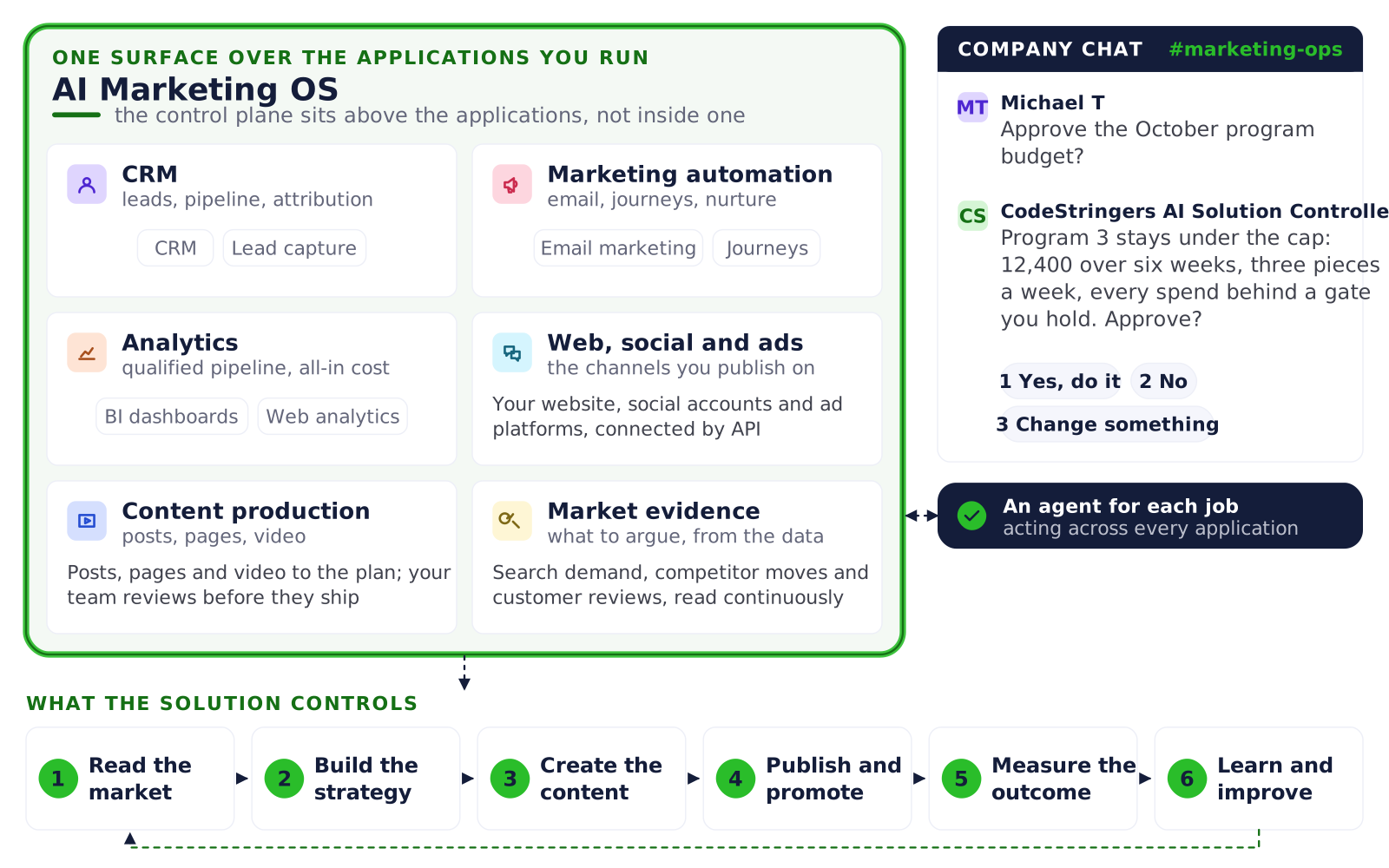
Marketing automation software executes what a person configures: sequences, triggers, scoring rules. An AI control plane sits above those applications and the channels, reads market evidence to decide what to argue, plans programs, produces and publishes the pieces, promotes them and closes the loop to the CRM, with a person approving each outcome. The automation tools stay in place and keep recording; the control plane does the planning and the work between them.
What does a person approve and what do the agents do?
A person approves the theme set each month, the slate of programs and their budgets, each draft before it publishes, each campaign before money is spent, and any proposed change that comes out of the daily numbers. The agents read the market, score themes, write and render the pieces, run the campaigns within the approved caps, pull every source into one table each morning and turn observations into proposals. Caps are enforced in code below the gate.
Does AI Marketing OS replace our CRM, ad accounts or website platform?
No. It runs above the applications you already have: the CRM, marketing automation, social publishing, the paid search and analytics accounts, the website platform and the video renderer, connected through their own APIs. Leads land in your CRM with the campaign and click attached; spend happens in your ad account under a cap. Nothing is migrated away. If a platform is not yet connected, connecting it is a small project.
How is marketing spend governed?
Every dollar has a gate a person holds. A budget proposal arrives in company chat with the cap check; the person replies with a digit; the system applies the change and reads it back. Daily and monthly caps are enforced in code beneath the gate, so an approval cannot exceed them. Every action is logged with who approved it, and no credential is ever visible to a person or a prompt. Kill rules end a program that misses its measure.
What is included in the subscription?
A managed solution is one monthly subscription with four parts: the software, meaning the agents, routines, gates and run log; the integration to your platforms; managed operations, which are the people and monitoring that keep connections tested and regressions fixed; and advisory, a senior person reviewing the plan, targets and results with you. Media spend is separate and stays in your own accounts. Tiers follow how much of the solution you use in a month.
How do we know what marketing actually costs per piece and per lead?
Every piece carries the program slug, and every campaign reports media, leads, sales-ready leads and cost per lead against its kill rule. Production cost is tracked per piece, including rendering, so the all-in cost of a post, a video or a campaign is a number rather than an allocation. The same lines that appear in the performance table answer in chat, which is how the function is judged on qualified pipeline rather than activity.