- Match
- KA-2210 at 0.91; KA-1940 at 0.62
- Linked article
- none KA-2210
- Status
- Open Closed
- KA-2210 used
- 14 times 15 times
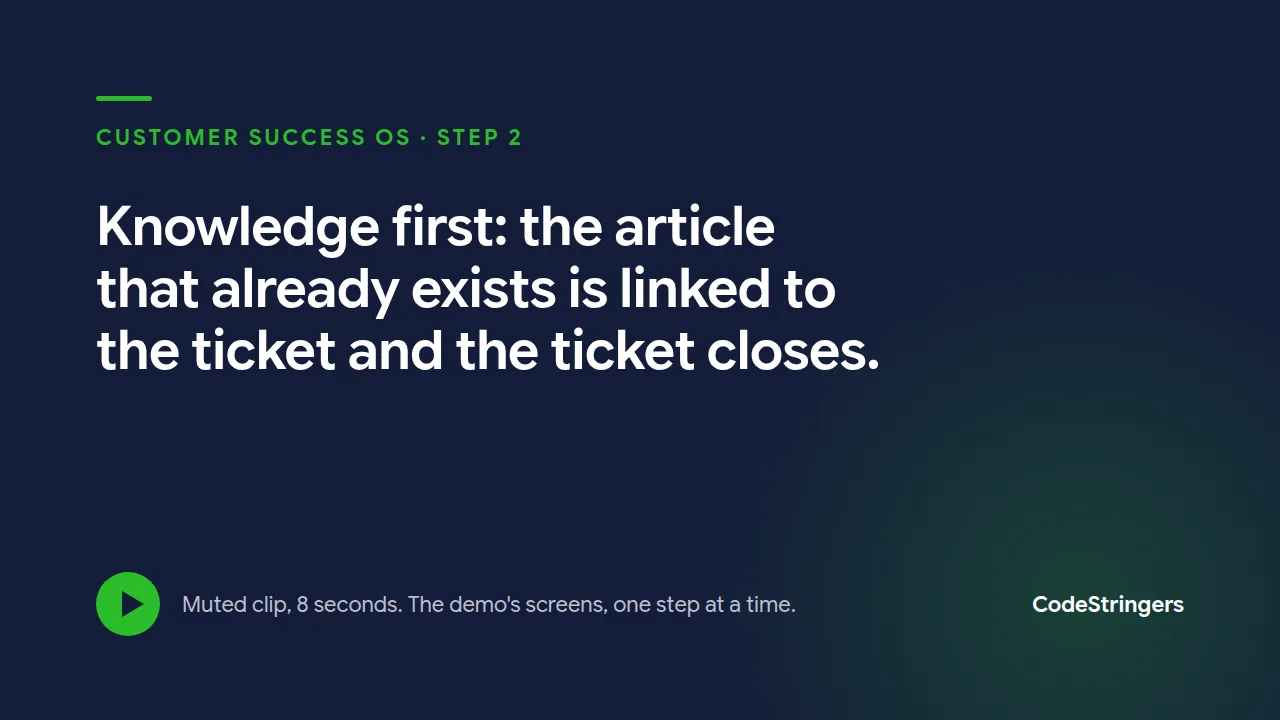
Logged. Priya N, 1, 09:14. Reply sent, article linked, ticket closed. Nobody opened the knowledge base.
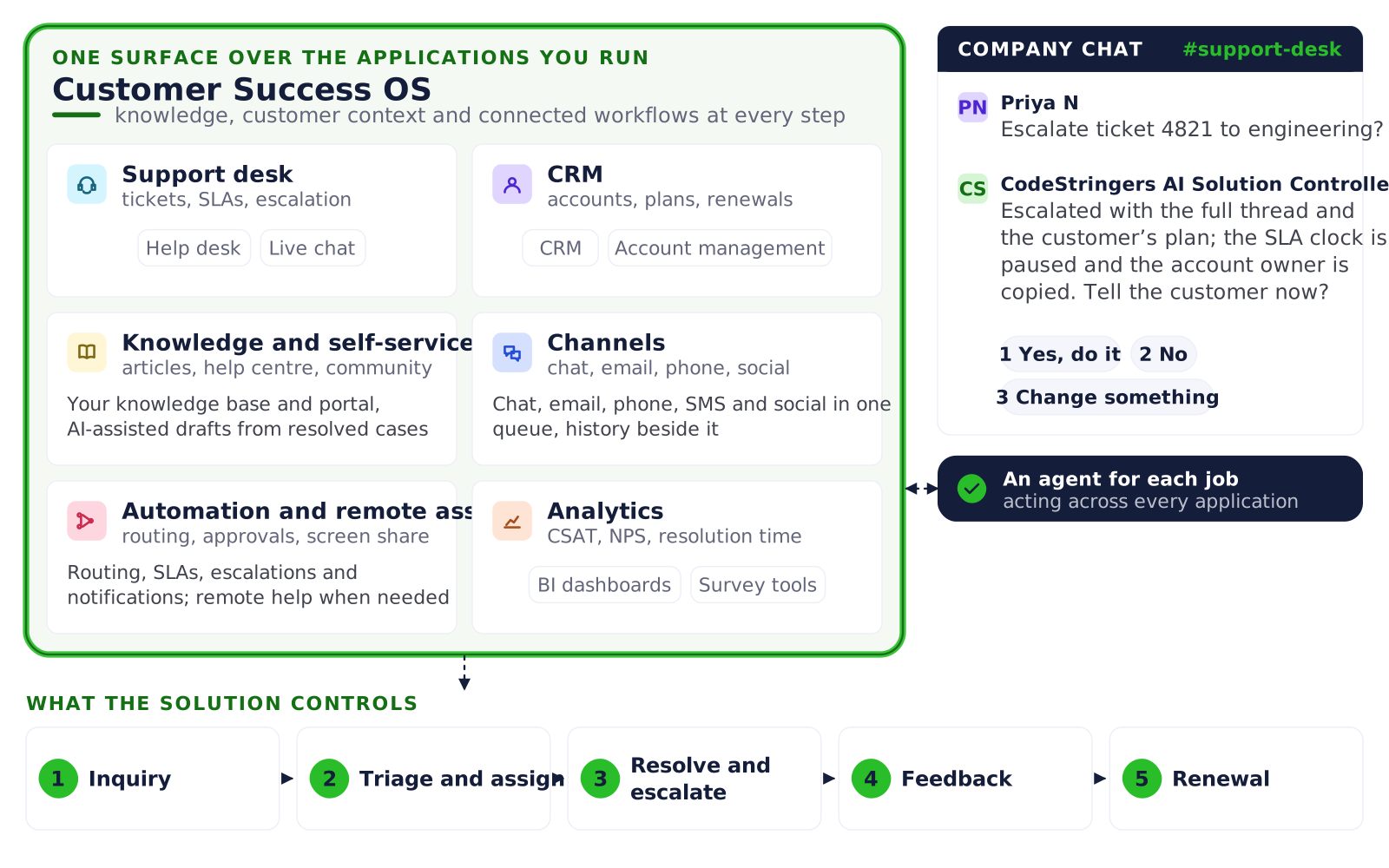
Unify every channel, knowledge resource, automation, AI insight, remote support, and self-service into one connected operating environment. Empower your team to resolve faster, delight customers, and drive measurable business outcomes.
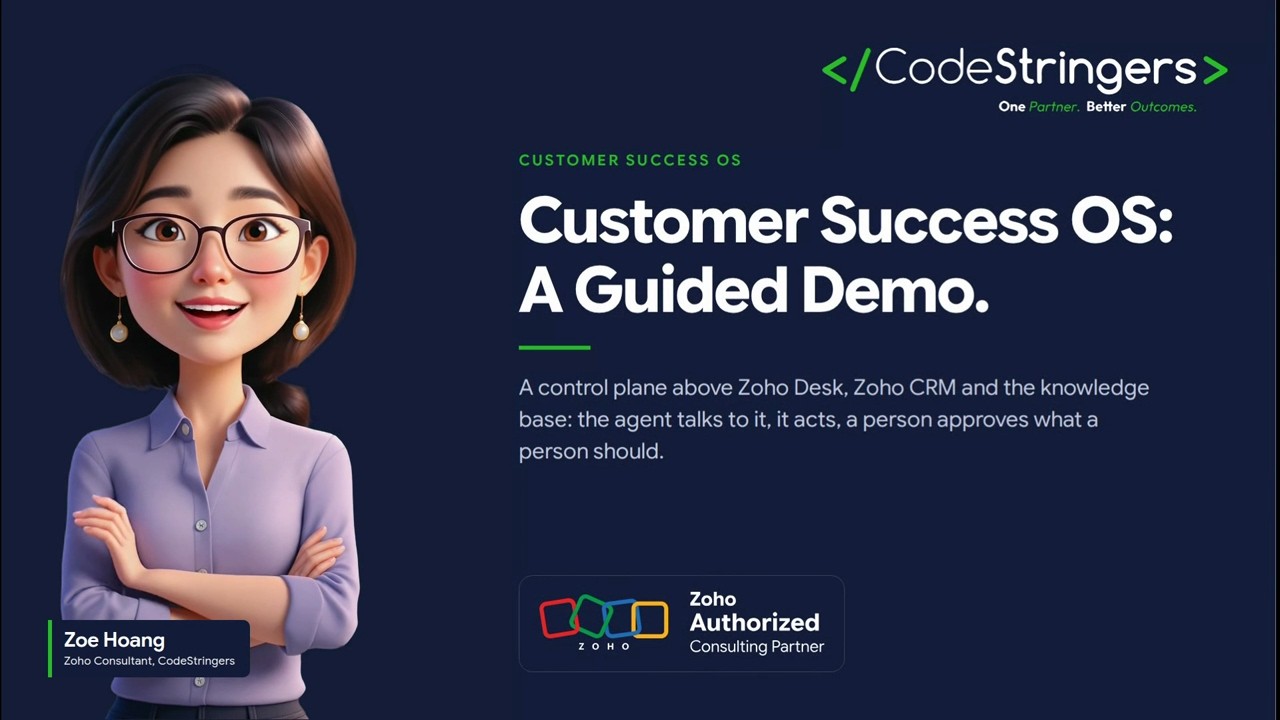
Customer Success OS is an AI control plane above your help desk, CRM and knowledge base. Every interaction starts with knowledge: the agent states the issue, the plane finds the article or drafts one while the agent solves, then routes, predicts escalations and watches renewal health. Agents work in chat; the screens stay for reading.
When systems, data, and knowledge don’t work together, your team works harder—and your customers feel it.
Customers repeat themselves across email, chat, calls, and social.
More volume, more complexity, and higher cost to serve.
Too many handoffs, approvals, and switching between tools.
Service targets are missed without unified visibility.
Limited insight into the customer history or service quality.
Agents lack the answers they need—so customers wait longer.
Customer success touches the full journey—from first contact to long-term loyalty. Your tools should help you deliver consistent, proactive, and personalized support at every step.
One Platform. Your End-to-End Customer Success Experience.
Connected service operations improve consistency, response times, self-service adoption, and customer satisfaction. With the help desk at the center, teams reduce complexity, give agents what they need, and help customers help themselves.
Resolve issues quickly across every channel.
Knowledge and context prevent repeat work.
Customers find answers without waiting.
Unified view of every interaction and history.
Proactive service builds loyalty and growth.
A connected service operation should make support easier to deliver, easier to measure, and easier to improve. We design around the channels, knowledge, workflows, automation, and feedback loops that determine customer outcomes.
Connect every channel into one unified experience.
Capture, organize, and deliver answers that scale.
Smart routing, SLAs, and fast resolution workflows.
Enable customers to find help and engage on their terms.
Data-driven insights to improve service performance.
Automate tasks and approvals to reduce manual work.
A help desk works best when connected with the right apps and capabilities. Together, these tools create a seamless experience for your team and your customers.
Powerful, multichannel help desk at the center.
Unified customer data and relationship view.
Centralized content for agents and customers.
Service dashboards and performance insights.
Smarter suggestions, summaries, and task automation.
Connect the tools you use and the systems you need.
We connect people, process, knowledge, and systems—so your team can deliver exceptional service at scale.
Customer success is where service quality, customer loyalty, internal efficiency, and knowledge maturity all converge. Get it right, and everything improves.
You adopt the paradigm; we run it. Every solution we sell is a managed solution: the software, its integration to the platforms you already run, the people who keep it running, and the advice that keeps what goes into it sound. One subscription, four parts.
The solution and its surface: the agents, the routines, the gates, and the record of every run. Released as versions, tested before each one reaches you.
Connected to the platforms you already run, CRM, marketing, finance, help desk, through their own APIs, with every write read back and logged.
The people and the monitoring that keep it running: connections tested daily, a regression fixed before you see it, upgrades applied, administration done, questions answered.
The strategic work that keeps the inputs sound. A system runs what it is given, and poorly conceived themes produce failed campaigns, so a senior person reviews the plan, the targets and the results with you.
As a subscription: one monthly price for the software, the integration, the operations and the advice, in tiers for each solution set by how much of it you use in a month. No hourly billing and no change order for a routine fix.
Operationally complex businesses that want the outcome run for them, not another application to staff. If what you need today is hours of configuration or integration work on your own platform, that is on our services pages and we take it on; the managed solutions are where we are going. Our services
Implementation, customization, optimization, and managed support.
Dashboards, reports, and insights that drive action.
Create, manage, and deliver learning and help content.
Connect your core applications with the apps and systems your business depends on.
Knowledge-centered support, or KCS, is a practice in which the knowledge base is created and maintained as a by-product of solving tickets rather than as a separate writing project. Every interaction starts by searching for an existing article; when none fits, the article is drafted from the ticket as the agent solves it and reviewed before publishing. Over time most questions are answered by linking an article, which is what reduces repeat tickets and time to resolution.
A help desk manages tickets: intake, routing, SLAs and resolution. Customer success software covers the whole relationship: onboarding, support, adoption, renewals and the signals that an account is at risk. The help desk stays at the centre here, with the knowledge base and the CRM joined to it, so that a ticket, an article and a renewal date are visible together. The aim is retention and confidence, not only closed tickets.
A health score per account combines signals the systems already hold: SLA breaches, failed knowledge articles, usage trends, open escalations and days to renewal. Accounts below a threshold are listed with the reasons and a proposed touch, such as a call this week or an adoption review, and a renewal gate is posted for accounts inside a set window. A person approves each touch, and it lands as a task in the CRM.
No. It runs above the help desk, the CRM and the knowledge base you already have, plus analytics, company chat, email and the customer portal, connected through their published APIs with keys from your own instance. Replies, article links and ticket status are written to the help desk and read back; renewal tasks land in the CRM. Agents work in chat; the application screens stay for administrators, reading and reporting.
When no article matches a ticket, the plane drafts one from the ticket thread as the agent solves it: the problem, the environment, the cause and the fix. The agent confirms the steps when done, a named reviewer is pinged and sees a draft rather than a blank page, and the article is published after review. The ticket is linked to the article, so the next occurrence closes by linking rather than by solving again.
Discovery first: following recent tickets from first contact to resolution across your help desk, knowledge base and CRM to show where answers are repeated and context is lost. Then the knowledge matching, routing and health rules are configured to your products and tiers, connections are made and agents are trained on the chat workflow. One queue goes live first. Timeline follows the number of channels, products and systems involved.

No-risk discovery. Real insights. Practical next steps—whether you work with us or not.
One question is enough. Say who you are and a person who has run this reads it and replies within one business day.