
The data model.
One definition per entity, agreed across departments, enforced in the systems rather than in a document.
A fractional CIO from CodeStringers owns the portfolio: what you run, what it costs, which system is authoritative for each fact, and what has to go. The role that turns a collection of applications into an integrated business solution.
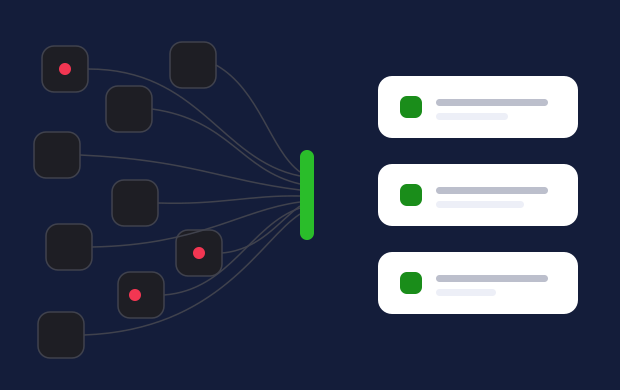
It accumulates. Sales needed a CRM. Finance needed something the CRM couldn’t do. Operations built a workaround in a spreadsheet that became load-bearing. Somebody signed a tool for one campaign in 2022 and it still holds the only copy of a customer list.
Each decision was locally reasonable. The aggregate is a portfolio nobody chose, with overlapping licence costs, four different spellings of the same customer, and reporting that requires a person to reconcile it by hand before anyone trusts the number.
This is the specific gap a fractional CIO closes. Not a systems audit that produces a spreadsheet. A person who owns the portfolio going forward and has the authority to retire things.
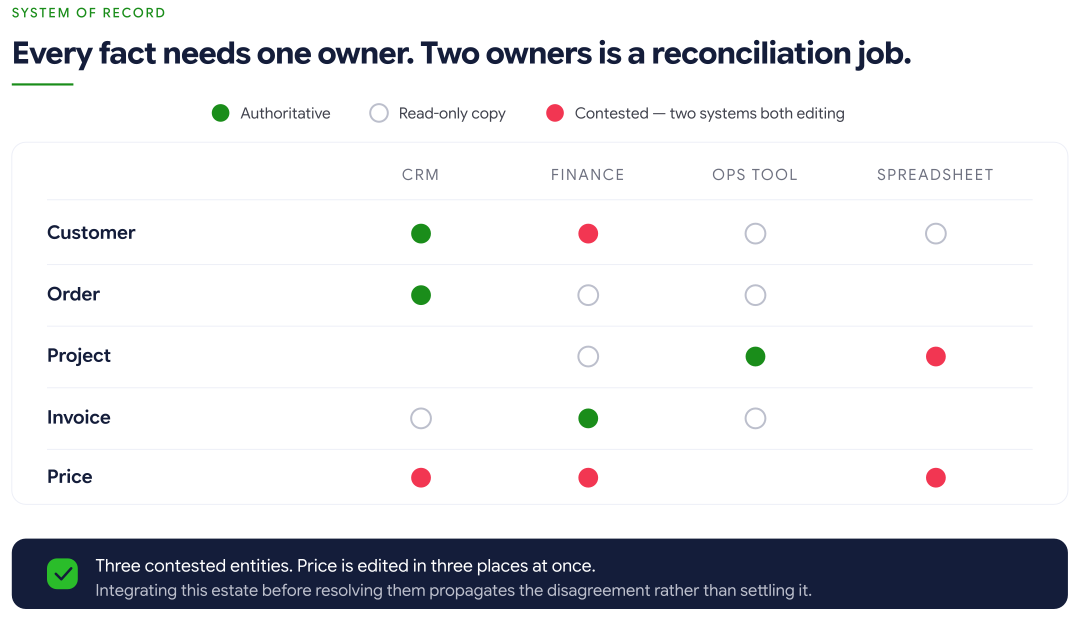
There is a persistent hope that connecting systems will resolve their disagreements. It does the opposite. Integration takes an unresolved data model and propagates it, faster and to more places, until the same inconsistency is visible in four dashboards instead of one. Before anything is connected, someone has to answer questions that are organizational rather than technical. What is a customer — the billing entity or the operating site? When sales and finance disagree about the value of a deal, which one is right? If a project can exist without an order, what created it? These have no technically correct answer. They have a correct answer for your business, and it has to be decided by someone with the standing to make it stick across departments. That is the job. It is why we treat the CIO role as a precondition for integration work rather than a follow-on from it.
One definition per entity, agreed across departments, enforced in the systems rather than in a document.
What you run, what each one costs, what overlaps, and what gets retired. Most mid-market portfolios have real money sitting in redundant licences.
Renewals evaluated before the auto-renew date, with a position on whether to keep, consolidate or replace.
Who can reach what, what happens when someone leaves, and where your data physically lives.
Implementation, integration and Managed Technical Operations under the same commitments. Retainer clients see a project plan with the full cost of a release before committing.
The portfolio decisions are what turn a set of applications into a single operating model rather than a collection of tools.
Shorthand: the CIO owns what the business runs on. The CTO owns what the business builds.
If your pain is a sprawling portfolio, disagreeing systems and reporting nobody trusts, that is a CIO problem. If your pain is a build backlog, a configure-versus-code decision, or technical debt you cannot size, that is a CTO problem.
Plenty of mid-market companies have both, which is why we hold them as separate roles rather than one blended title. Where both are needed we will say so, and scope them honestly rather than selling you one person wearing two hats.
Small, coherent estates do not need portfolio governance. Adding it is ceremony.
Some reporting disagreements are not data-model failures — they are two departments genuinely measuring different things on purpose. A CIO cannot fix that, and should not try.
If what you need is a one-time assessment and a report, ask us for discovery instead. It is cheaper, and if you don’t proceed it is free.
A chief information officer who holds the role on an ongoing basis at part-time hours. They own the systems portfolio, the data model, vendor decisions and security posture — the same remit as a full-time CIO, sized to a mid-market company that does not need one five days a week.
The CIO owns what the business runs on: the portfolio, the data, the vendors. The CTO owns what the business builds: architecture, the configure-versus-build line, technical debt. Different problems, different people.
Managed IT runs the infrastructure you have. A fractional CIO decides what you should have, so that what you run adds up to one integrated business solution rather than a collection of tools. The two work well together and are not substitutes.
Scaled to hours rather than headcount, and scoped during no-risk discovery with a guaranteed estimate. You pay for discovery only if you proceed.
Yes — platform implementation, systems integration, ongoing advisory and Managed Technical Operations, under the same commitments.
Maps what the business actually runs, names the entities in dispute, such as what a customer is or which deal value is right, and quantifies what the overlap in licences and reconciliation is costing. Then the data model is written down with one definition per entity, the application portfolio gets a keep, consolidate or retire position, and the first integration is sequenced only after those decisions are made.
When the portfolio has grown past the point where anyone chose it, usually somewhere beyond three systems that no longer agree, and reporting needs a person to reconcile it before anyone trusts the number. Earlier than that, a small coherent estate does not need portfolio governance. A one-time assessment rather than an ongoing role is better served by discovery.
A decision, for each application the business runs, about what it costs, what it overlaps with, which facts it is authoritative for, and whether it stays, consolidates or gets retired. Most mid-market portfolios carry real money in redundant licences and a few tools that hold the only copy of something important. The fractional CIO has the standing to retire things, which an audit does not.
Each renewal is evaluated before the auto-renew date, with a written position on whether to keep, consolidate or replace, and with the data model and the integration plan already decided so the choice is not made under deadline. The same review covers where the data physically lives, what happens to access when someone leaves, and whether the contract allows the exit.
Because integration propagates whatever definitions exist, faster and to more places. If sales and finance disagree about what a customer is, connecting their systems shows the same inconsistency in four dashboards instead of one. The organizational questions, which entity is which and who is right when two systems differ, have to be answered by someone with cross-department standing before anything is connected.
Whether this approach fits your business.
Why our way of working is different.
One owner across strategy, systems & software.
We write your systems’ configuration as code and let AI apply it: fields, picklists, layouts, workflow rules, integrations, read back and verified after every step, so a build that took weeks of clicking takes days.
Because the work is programmatic, we quote the outcome, not the hours. The estimate is guaranteed and discovery is no-risk.
Our own CRM rebuild in October 2026: 21 shared picklists, 3 modules, 88 fields, 7 layouts, 23 workflow rules and 16 actions, built through code in 22 verified runs, every step read back.
The same tools that configure your systems today are what run our agentic solutions tomorrow: one surface over the systems you already own. See the agentic solutions
Where we're not the right answer
Your portfolio is three systems and they agree. Small, coherent estates do not need portfolio governance. Adding it is ceremony.
No-risk discovery maps your systems, names the entities in dispute, and quantifies what the overlap is costing you. You get a guaranteed estimate for the work, and you pay for the discovery only if you proceed.


