
What Are the 12 Agile Manifesto Principles of Project Management?
There are 12 principles of Agile that build the foundation of the most popular way to manage projects in a knowledge work environment. Get to know their meanings and practical applications in modern-day project management.
According to the PMI Pulse of the Profession annual report, 48% of projects are not completed within the scheduled time, 43% go over their original budget, and 31% don't meet the initial goals and business intent. This doesn't sound very optimistic.
It is obvious that modern project managers are struggling to find the path to success, and why more and more of them turn to Agile project management and its core principles.
It all began back in 2001 with the Agile Manifesto. There was a need for a new approach to help organizations become more flexible, responsive, and adaptive to change.
Frustrated with the way things were, Agile's "founding fathers" developed a manifesto based on 12 principles.
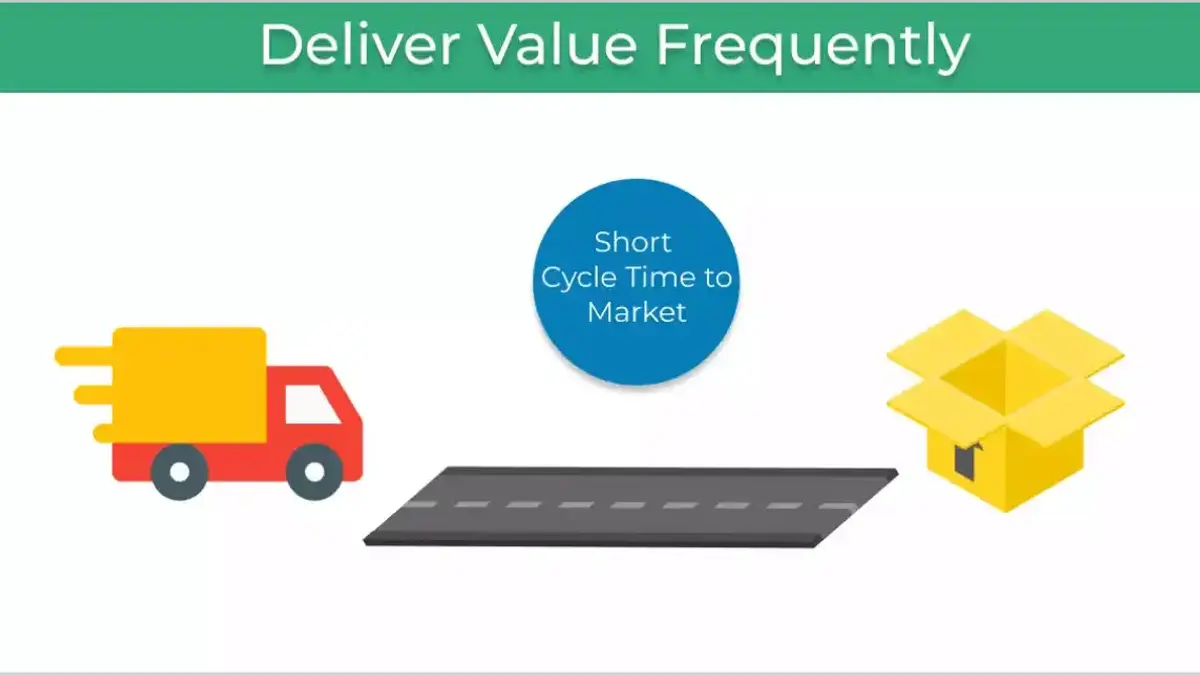
The original formulation of the first Agile principle states, "Our highest priority is to satisfy the customer through early and continuous delivery of valuable software." However, it is perfectly applicable in areas outside of software development.
As you can see, customer satisfaction ranks at the top of the 12 principles. Early and continuous delivery increases the likelihood of meeting customers' demands and contributes to faster ROI.
By applying this concept, you will increase your process's agility and respond to changes in a timely fashion. On the other hand, your customers will be happier because they will get the value they are paying for more frequently. Also, they will be able to provide you with early feedback, reducing the likelihood of making significant changes later in the process.
Still, if need be, change requests should be most welcome even at the late stages of project execution. The original text of the second of the Agile principles states that your team needs to "welcome changing requirements, even late in development. Agile processes harness change for the customer's competitive advantage".
In traditional project management, any late-stage changes are taken with a grain of salt as this usually means scope creep and thus higher costs. In Agile, however, teams aim to embrace uncertainty and acknowledge that even a late change can still deliver significant value to the end customer. Given the nature of Agile's iterative process, teams shouldn't have trouble responding to those changes in a timely fashion.
The third Agile project management principle originally states, "deliver working software frequently, from a couple of weeks to a couple of months, with a preference to the shorter timescale". Its prime goal is to reduce the batch sizes that you use to process work.

This principle became necessary due to the extensive documentation that was part of the software development planning process at the end of the 20th century. Logically, by taking it to heart, you will reduce the planning time frame and spend more time working on your projects. In other words, your team will be able to plan more agilely.
Agile relies on cross-functional teams to facilitate communication among the different stakeholders in the project. As the original text states, "business people and developers must work together daily throughout the project".
In a knowledge work context that is not explicitly related to software development, you can easily change the word "developers" to "engineers," "designers," or whatever best suits your situation. The goal is to create a synchronization between the people who create value and those who plan or sell it. This way, you can make internal collaboration seamless and improve your process performance.
The logic behind the fifth Agile principle is that by reducing micromanagement and empowering motivated team members, projects will be completed faster and to a higher standard.
Like the original text following the Agile manifesto states, you need to “build projects around motivated individuals. Give them the environment and support they need, and trust them to get the job done”.
The second sentence of this principle is especially important. If you don’t trust your team and keep even the tiniest decisions centralized within your company, you will only hinder your team’s engagement. As a result, individuals will never feel a sense of belonging to the purpose that a given project is trying to fulfill, and you won’t get the most of their potential.
“The most efficient and effective method of conveying information to and within a development team is face-to-face conversation.”
In 2001, this principle was spot on. By communicating in person, you reduce the time between asking a question and receiving an answer. However, in the modern work environment, where teams collaborate across the globe, it provides a severe limitation.

Thankfully, with the development of technology, you can interpret this Agile principle from face-to-face to "synchronous" or other direct forms of communication. So as long as you have a way to quickly reach your team and discuss work matters without bouncing back and forth emails for days, you are good to go.
The 7th of the Agile core principles is pretty straightforward. It doesn't matter how many working hours you've invested in your project, how many bugs you managed to fix, or how many lines of code your team has written.
If the result of your work is not the way your customer expects it to be, you are in trouble.
The precise formulation of this principle is "Agile processes promote sustainable development. The sponsors, developers, and users should be able to maintain a constant pace indefinitely."
Logically, when putting Agile into practice, your goal is to avoid overburdening and optimize how you work so you can frequently deliver to the market and respond to change without requiring personal heroics from your team.
As stated by the Agile Manifesto founders, "continuous attention to technical excellence and good design enhances agility". In a development context, this principle allows teams to create not just working software but also a high-quality, stable product.
As a result, changes to the code will be less likely to cause bugs or malfunctions.
Still, the 9th Agile management principle applies to every industry. When you maintain operational excellence, you will have less trouble responding to changes and staying agile.
This principle's original content can be a bit confusing, as it states, "Simplicity–the art of maximizing the amount of work not done–is essential". Yet, it is very practical.
If you can do something simply, why waste time complicating it? Your customers are not paying for the amount of effort you invest. They are buying a solution to a specific problem that they have. Keep that in mind when implementing Agile and avoid doing something just for the sake of doing it.
Once again, we realize that when provided with freedom, motivated teams generate the most value for the customer. When discussing this principle, the 17 fathers of Agile stated that "the best architectures, requirements, and designs emerge from self-organizing teams".

If you have to push your team and "drive them forward", maybe you are not ready for Agile, or you need to make some changes to your leadership style.
Finally, we've come to the last of the Agile management principles. It is about evaluating your performance and identifying areas for improvement. The long version of the principle states: "At regular intervals, the team reflects on how to become more effective, then tunes and adjusts its behavior accordingly".

By doing this, you will be able to experiment and continuously improve your performance. If things don't go as you've planned, you can discuss what went wrong and adjust to get back on track.
There are different Agile methods, but Agile itself is not a methodology or a framework. It is a set of values and principles. This is why it is incredibly flexible and can be applied by a variety of organizations. However, to achieve a successful transformation, you need the necessary foundation. Implementing the 12 Agile principles is precisely how you build it.
The Agile Manifesto also consists of 4 values. Read about them here.
Good luck!
In a no-risk discovery we look at how your work moves between your systems today and show what one connected system would do differently. You pay only if you proceed. Or see how we approach it.
More on the same problem:
Introduction to agile (article)
Agile vs Waterfall: How to Choose for Your Next Project (article)
The Agile Manifesto has four values and twelve principles. The values are the short statements of preference: individuals and interactions over processes and tools, working software over comprehensive documentation, customer collaboration over contract negotiation, responding to change over following a plan. The twelve principles expand those values into guidance a team can act on, such as delivering working software frequently and reflecting regularly on how to improve. The values set the direction; the principles describe the behavior.
The principles are method-neutral. Scrum and Kanban are frameworks that put them into practice in different ways: Scrum through fixed-length sprints, defined roles and ceremonies; Kanban through a continuous flow with limits on work in progress. A team can follow the principles with either, or with neither, and a team can run every Scrum ceremony while ignoring the principles. The frameworks are the mechanics; the principles are what the mechanics are for.
Yes, with light translation. Replace working software with a working deliverable, and developers with whoever does the work. Marketing teams, operations groups and professional services firms use the same ideas: deliver in small increments, get feedback early, let the people doing the work organize it, and review the way of working regularly. The principle about sustainable pace and the one about simplicity transfer without any translation at all.
Welcoming changing requirements, which gets read as accepting every request. The principle assumes a prioritized backlog and a product owner deciding what the change displaces. Without that, change becomes scope creep and the team blames agile. The second most common is the face-to-face principle, applied as a rule against written communication; the intent is fast, direct conversation, which a video call or a quick message serves for a distributed team.
Look for the observable consequences. How often working software reaches users. How quickly a change request gets a decision. Whether retrospectives produce changes that stick. Whether the team's pace is steady or alternates between crunch and recovery. Whether business stakeholders attend reviews. None of these is a score, but a team that tracks them for a few months can see which principles it practices and which it only recites.
"Something isn't working." "We're outgrowing our tools." "We're afraid to make the wrong move." No-Risk Discovery is a short, practical conversation that gets you clarity before you commit to anything big. We'll tell you if we're a fit. If we're not, we'll tell you that too.
Say who you are and ask. A person replies within one business day.
