
Offshore Development: Is It Right for My Business?
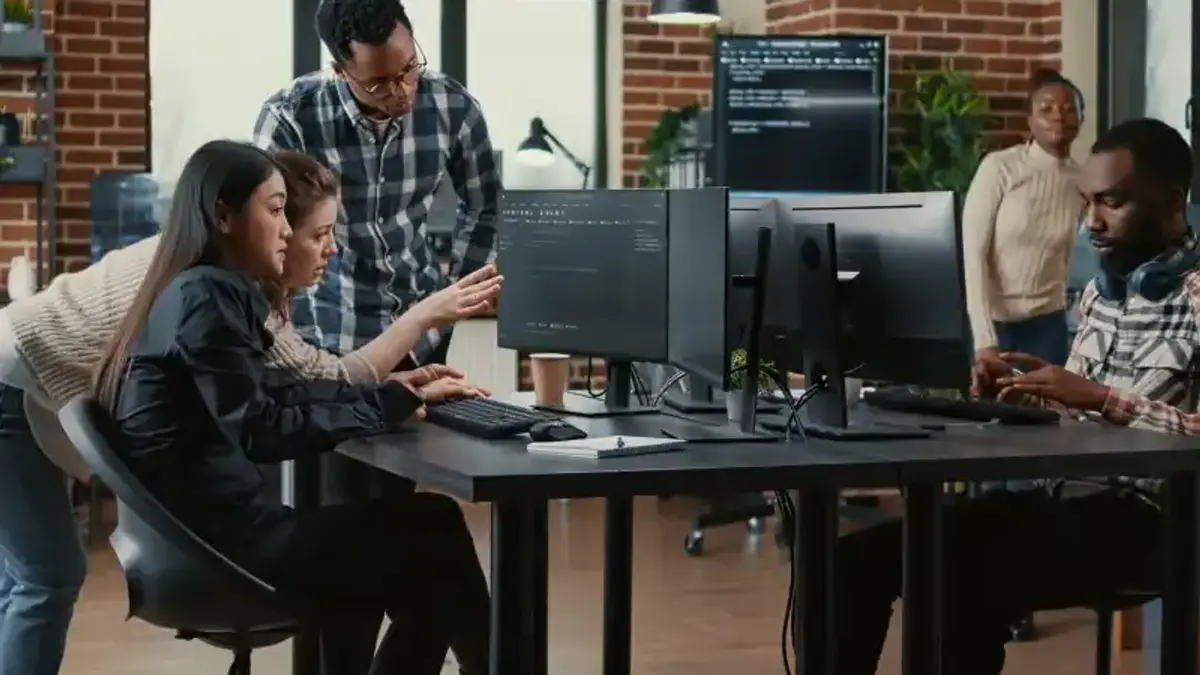
Recently, we had a discussion about the pros and cons of near shore development. However, we should probably also take a look at offshore development, especially since that's the method that we employ at CodeStringers.
The term “offshore development”, technically, refers to the practice of hiring a team or individual developers from a country other than one's own, primarily to design, develop, test, and maintain software. However, in practice, the term often means outsourcing development to a country that is several time zones away from the client.
Offshore development started as early as the late 1960s when Tata Consultancy Services was founded to provide low-cost development to US and European companies. Offshore development became more ubiquitous, however, in the 1990s when the Y2K scare and the dot-com boom caused a surge in demand for software developers that domestic markets couldn’t fill.
Cost Savings: The “elephant in the room” is that companies usually choose offshore development because it is cheaper than developing in-house. For example, a senior software developer in the US can cost $200k/year or more. Whereas a developer at the same experience level could expect to make $100k in Eastern Europe, and closer to $50k in east and south Asia.
Access to a Larger Talent Pool: Offshoring allows you to tap into a global talent pool, accessing skills and expertise that might be scarce or expensive in your home country. Many Eastern European and Asian countries have a large qualified talent base because they emphasize coding skills in their educational system, and because software development is culturally popular as a career choice.
Flexibility and Scalability: With offshore vendors, it's often easier to scale the team up or down based on project requirements, largely because of the aforementioned larger talent pool.
24/7 Productivity: The time difference can be a benefit. While your local team rests, the offshore team can continue working, leading to round-the-clock progress.
Communication Barriers: Language and cultural differences can lead to misunderstandings. Therefore it is important to have someone with strong communication skills on your team when you’re dealing with an overseas development organization.
Time Zone Differences: While this can be an advantage, it can also be a challenge when trying to arrange meetings or get real-time feedback.
Quality Concerns: Not all offshore teams maintain the same standards. It's vital to vet any potential partner carefully.
This is the million dollar question. The short answer is: yes, offshoring can be cheaper than hiring local developers due to the wage differences between countries. However, the real cost savings can vary based on project complexity and hidden costs.
Another big factor is… who is the company and the country that you’re outsourcing to? At CodeStringers we’ve found that Vietnam has successfully mitigated most of the alleged “cons” to offshore outsourcing listed above. Vietnam has an abundance of skilled technologists with strong English skills and with a high level of understanding of US culture and business practices.
Ultimately, everything depends on the specific needs and goals of the client organization. However, we strongly believe that, if you hire the right firm, offshore development will give you the best “bang for your buck”.
In a no-risk discovery we look at your CRM, finance and operations systems and who owns each part, and show what a connected system would do differently. You pay only if you proceed. Or see how we approach it.
More on the same problem:
Offshore vs Onshore Software Development: The Real Tradeoffs (article)
Offshore Development Center: What is it and How Can You Benefit from One? (article)
The Emerging Market for Integrated Business Solutions (video)
The page gives the scale: a senior developer in the US can cost 200,000 dollars a year or more, roughly 100,000 in Eastern Europe and closer to 50,000 in east and south Asia. An offshore vendor's rate includes its own overhead and margin, so the saving on salary is not the whole picture. Management time, communication gaps and rework narrow the gap, and a poor partner can erase it. The saving is real when the firm is well chosen.
Work that can be specified clearly and does not need hour-by-hour collaboration: a defined product build, a maintenance backlog, QA and testing, and support for a mature system. Projects with stable requirements and a person on the client side who owns communication do well. Early-stage products whose requirements change weekly, or builds that need constant design conversation, suffer more from the time difference and are better served nearshore or with an onshore lead.
Agree a daily overlap window, even a short one, and hold the standup inside it. Write requirements and decisions down so the offshore team can work while the client sleeps rather than wait for answers. Put one person on each side in charge of communication. Some firms place product managers and client-facing staff in the client's time zone with engineering offshore, which gives the client same-day answers and keeps the cost advantage.
Communication gaps from language and culture, which turn ambiguous requirements into wrong builds. Time zone delays that stretch a question-and-answer loop from minutes to a day. Inconsistent quality, since the client has limited visibility into who is doing the work. And intellectual property and data protection in jurisdictions where contracts are harder to enforce. Each risk is reduced by vetting the partner carefully, writing specifications well and putting IP assignment and security controls in the contract.
Check English proficiency and whether the working process fits your development cycle. Ask for references and similar past projects. Confirm whether the engineers are employees or subcontractors, and whether the offshore entity is owned by the firm you are contracting with. Ask how they protect intellectual property and secure data. Judge cultural fit in the first conversations. A short paid discovery phase shows how the team actually works before a larger commitment.
"Something isn't working." "We're outgrowing our tools." "We're afraid to make the wrong move." No-Risk Discovery is a short, practical conversation that gets you clarity before you commit to anything big. We'll tell you if we're a fit. If we're not, we'll tell you that too.
Say who you are and ask. A person replies within one business day.
