Zoho CRM Customization: How to Create Custom Modules, Step by Step
Updated: 3 days ago
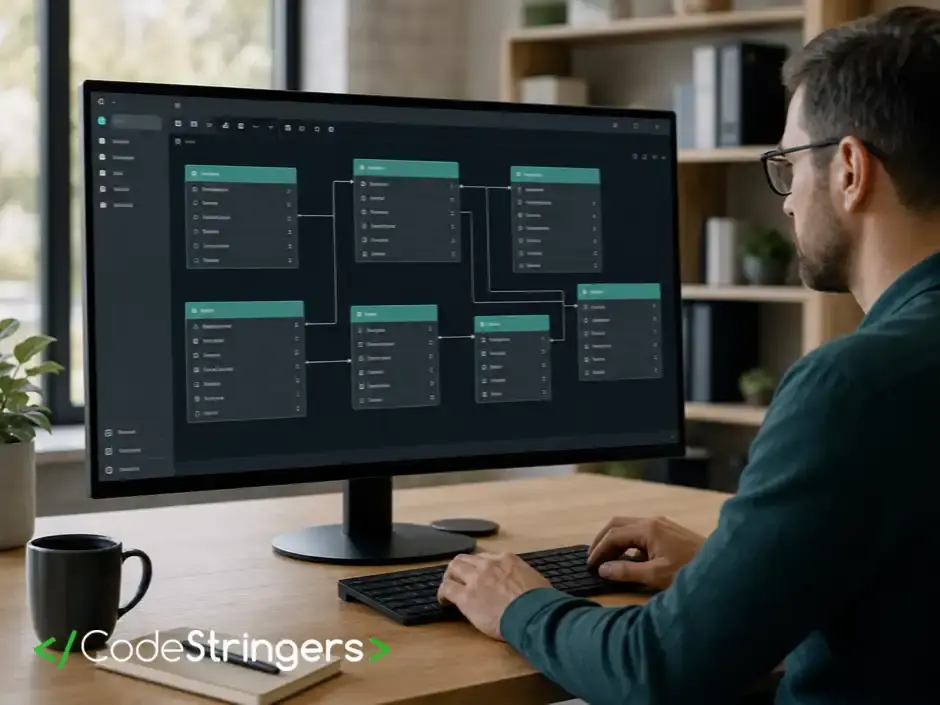
Every growing team eventually tracks something Zoho CRM didn't ship a home for — a property, a piece of equipment, a warranty claim — and modeling it cleanly is exactly the kind of problem a Custom software developer is built to solve. The data usually starts life in a spreadsheet, then gets shoehorned into the Deals module until "Deal Stage" is quietly doing four jobs at once. The clean fix is a custom module, and learning how to create custom modules in Zoho CRM rarely means writing a line of code. This guide walks the actual build.
A custom module in Zoho CRM is a standalone record type — with its own fields, layout, permissions, and reports — that you create when your business tracks something the default modules (Leads, Contacts, Deals) don't represent. You build one under Setup → Customization → Modules and Fields → Create New Module. Every paid edition supports them; the only differences are how many you get and who's allowed to make them.
When do you actually need a custom module?
Before you build anything, rule it out. Not every new "thing" deserves its own module, and the wrong call here is the one that hurts six months later.
A custom field is enough when you just need to capture an extra attribute on an existing record — a "Renewal Date" on an Account, a "Referral Source" on a Lead.
A subform fits when you need a repeating table of line items inside a parent record — order lines on a Deal, for example. The rows live with the parent and travel with it.
A custom module is right when the thing has its own life: its own stages or workflow, its own permissions, its own reports, or it needs to be linked from several other modules at once. Assets, contracts, properties, and inspections almost always belong here.
The tell is ownership and reporting. If you'll ever ask "how many of these are open, and who owns them?" — that's a module, not a field.
How do you create a custom module in Zoho CRM?
Once you've confirmed you need one, the build itself takes a few minutes. You'll need the Module Customization permission in your profile, so if the option is grayed out, that's why.
Go to Setup → Customization → Modules and Fields.
On the Modules tab, click Create New Module.
Enter the module name in both singular and plural forms (Zoho uses each in different places — "Property" for a record, "Properties" for the list view). Choose it as an Organization module so the whole org can use it.
Drag the fields you need onto the layout from the field tray. Set each field's type deliberately — text, picklist, lookup, date, currency — because type is the one thing you can't cleanly change later.
Add a Lookup field to connect the module to its parent (for example, an Asset that belongs to an Account). This is what makes the record show up in a related list on the other module.
Set module permissions — which profiles can view, create, edit, and delete records — then Save.
That's the whole flow. The record type now appears in your module tabs with its own list views, and you can layer workflows, field types, and page layouts on top of it exactly like a native module. If you want the module wired into other systems from day one, that's where Zoho integration work usually starts.
How many custom modules can you have?
The cap depends on your edition, and the count is combined with team modules — not tied to your user count. These are the current limits from Zoho's help documentation:
Edition | Max modules (custom + team) |
Standard | 10 |
Professional | 25 |
Enterprise | 200 |
Ultimate | 500 |
For most small and midsize teams, Standard's ten is plenty. If you're modeling an entire operation — assets, contracts, sites, work orders — you'll want Enterprise's headroom. A CRM that fits the business the way custom modules let it is also a CRM people actually use, and adoption is where the return lives: Nucleus Research found CRM pays back $8.71 for every dollar spent, up from $5.60 in 2011.
Not sure which edition or data model fits your process? Book a free Zoho consultation and we'll map it with you before you build.
What mistakes force a rebuild later?
We've been called in to untangle plenty of custom modules that started fine and ended up load-bearing. The recurring ones:
Using a subform where a module was needed. Line items buried in a subform can't get their own permissions, workflows, or clean reports. If you'll ever report on those rows independently, make them a module.
Guessing at field types. Switching a text field to a picklist — or a lookup to something else — after data is in it usually means a migration, not a click. Decide types up front.
Modeling relationships as free text. "Related account: Acme Corp" typed into a text field can't be filtered, rolled up, or kept in sync. Use a lookup so the records are genuinely connected.
Building a module for what's really a field. A picklist value doesn't need its own module. Over-modeling makes the CRM harder to navigate than the spreadsheet you replaced.
None of these are hard to avoid — they just cost real time to undo. When a module carries automation or feeds a downstream system, it's worth a second opinion from Zoho CRM consultants before you turn it on for the whole team — and if it's starting to look like a small application in disguise, our take on custom software vs off-the-shelf is a useful gut check before you commit.
FAQ
Can I convert an existing module or subform into a custom module? Not directly. Zoho has no one-click "promote to module" action. You create the new module, then migrate the data in — usually by exporting the subform or source records and importing them, mapping each field. Plan the field types before you import so nothing has to change afterward.
Can I delete a custom module after I create it? Yes, but deletion removes all of its records and any related data permanently. Before deleting, export the records and check for workflows, lookups, or reports that reference the module, since those will break. If you might need it later, deactivate the module instead of deleting it.
Do custom modules count against my storage or record limits? Custom module records draw from the same record and data storage as your standard modules — they don't get a separate allowance. The module count is what's capped per edition; the records inside them share your org's overall storage.
Can I create custom modules with an API instead of the interface? Yes. Zoho CRM's Modules API lets you create and update module metadata programmatically, which is how a build partner scripts a repeatable setup across sandbox and production. For a one-off, the Setup interface is faster; for a templated rollout, the API pays off.
The short version
A custom module is the right tool the moment a business object has its own lifecycle, permissions, or reporting — anything less, and a field or subform will do. Build it deliberately: confirm you need it, set field types once, connect it with lookups, and mind your edition's module cap. Get those four right and the module scales with you instead of against you. If you'd rather have someone map your process to the cleanest data model before you build, Book a free Zoho consultation and we'll sketch it with you.
By the CodeStringers Team — Zoho Experts & Custom Software.
CodeStringers is a custom software engineering firm with a dedicated Zoho practice. We write from work we've actually shipped for clients — the data models, migrations, and integrations behind CRMs that hold up under real use.
Related content.
If this is the problem you are working on, the solution page shows how we approach it, and the pieces below go deeper.


Comments