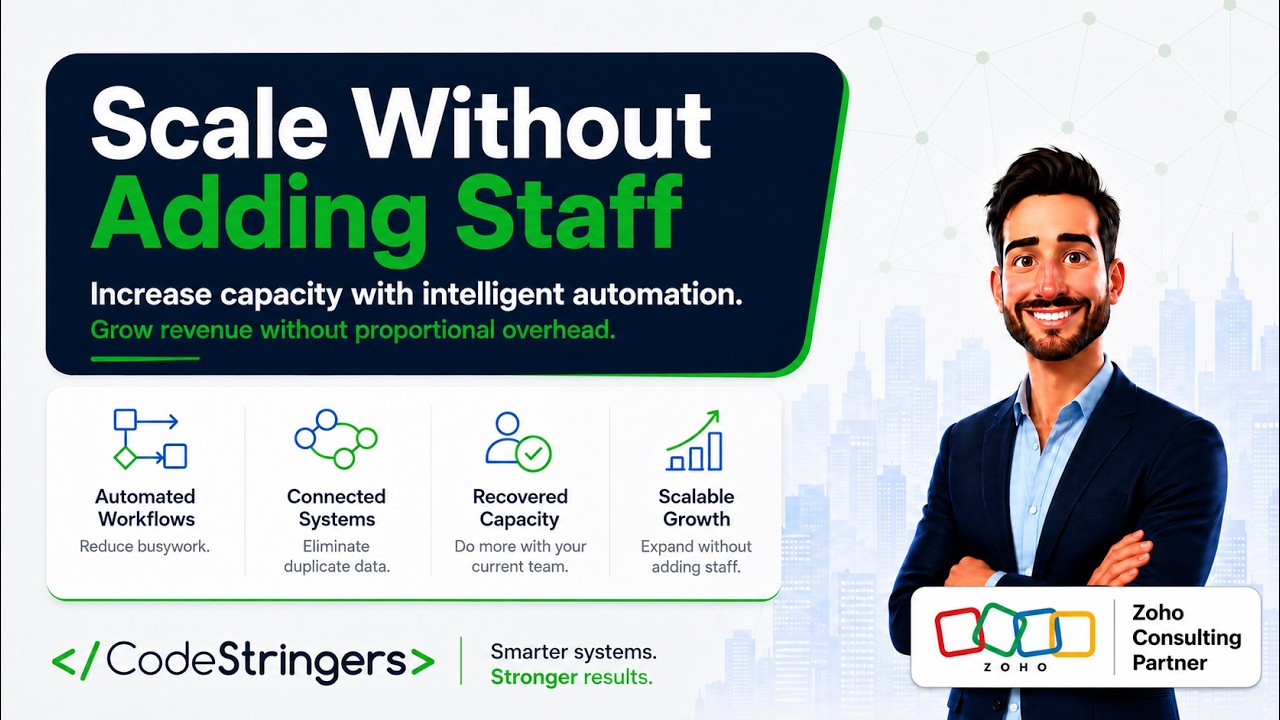
See it run

The hidden cost of manual data entry.

Manual data entry looks like a minor administrative task. Its real cost reaches well beyond the time spent copying and pasting.

Automation2 min watchPerspective

In this video.

Duplicate entry, disconnected systems and manual reconciliation quietly consume capacity and margin. What changes when information is entered once and shared everywhere.

What this covers.

  • Duplicate entry and reconciliation consume operating margin
  • Enter once, share across sales, finance and reporting
  • Automation removes repetitive work, not people
Read the full video transcript.

Most business leaders don't wake up worried about manual data entry. They worry about missed sales, shrinking margins, delayed orders, employee burnout, and finding enough capacity to grow. But behind many of those problems is the same invisible expense: employees spending hours every day moving information from one system to another. Consider a business with eighteen office employees. If each person spends just forty-five minutes a day entering or re-entering information, at a fully loaded cost of forty-two dollars an hour, that adds up to more than one hundred forty-one thousand dollars every year.

And every manual touch creates risk. A phone number is entered incorrectly. A price is outdated. An invoice goes to the wrong customer. Inventory no longer matches reality. Then the original five-minute task becomes a thirty-minute correction. Someone investigates it, someone fixes it, someone apologizes, and the business absorbs the cost. The alternative is simple: enter information once and use it everywhere. A customer submits an inquiry. The CRM creates the record automatically. Sales is notified. A quote is generated using current pricing. Once approved, accounting, inventory, operations, customer communications, and management dashboards all update from the same information.

No duplicate entry. No reconciliation. No chasing information. Leadership gets current information, teams make faster decisions, and customers get better answers. Automation doesn't replace people. It removes repetitive work so your team can focus on customers, strategy, problem-solving, and growth. At CodeStringers, we connect business systems, automate repetitive workflows, and create a single source of truth that scales with growth. Schedule a complimentary Operational Efficiency Assessment, and let's measure how much time, money, and productivity your business could reclaim. One Partner. Better Outcomes.

Questions people ask.

How do you calculate the cost of manual data entry?

Count the people who re-key information, estimate the minutes each spends per day, and multiply by a fully loaded hourly rate. The video uses eighteen office employees at forty-five minutes a day and forty-two dollars an hour, which comes to more than one hundred forty-one thousand dollars a year. That figure covers only the typing. Corrections, chasing missing updates and the decisions made on stale information are on top of it.

What are the risks of manual data entry beyond lost time?

Every manual touch is a chance for a mismatch. A phone number is typed wrong, a price is out of date, an invoice goes to the wrong customer, or the inventory count stops matching the shelf. Each mistake turns a five-minute task into a thirty-minute correction that someone investigates, fixes and apologises for. The business absorbs that cost quietly, which is why manual data entry rarely appears on anyone's list of problems.

How do you eliminate duplicate data entry between systems?

Decide which system creates each kind of record, then connect the others so they read from it. A customer inquiry creates the record in the CRM, sales is notified, a quote is generated from current pricing, and once approved the accounting system, inventory, operations and the management dashboards update from the same information. Nobody re-types the order, so there is nothing to reconcile and no second copy to drift out of date.

Does automating data entry replace employees?

No. Automation removes the repetitive copying between systems, not the people who did it. The hours come back to the team for customer conversations, problem-solving, planning and growth, which are the jobs that need judgment. Most growing firms are short of capacity rather than over-staffed, so the practical result is that the same team handles more customers and orders without the business hiring simply to keep the systems updated.

Integrated business solutions

One partner. Better outcomes.

We design, build, integrate and operate AI-driven, platform-agnostic integrated business solutions for operationally complex companies. Start with a conversation; we will tell you if we are a fit.