See it run

What is business process automation? An introduction.

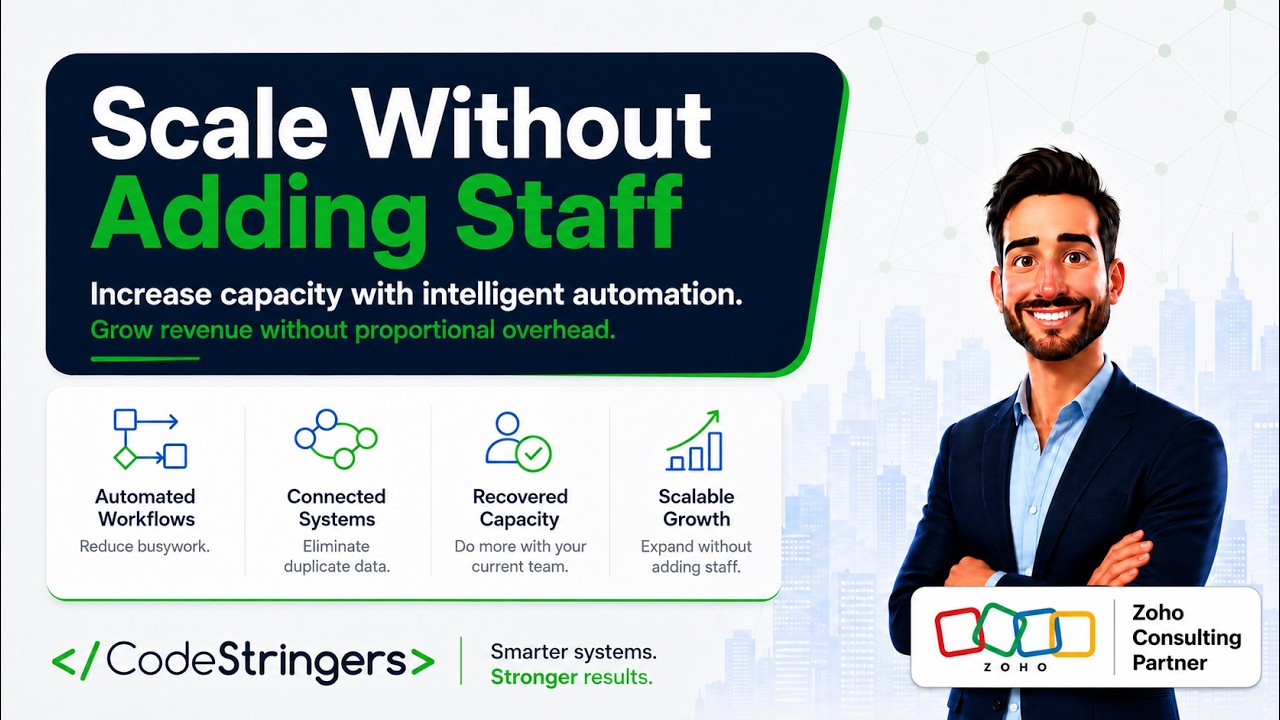
Intelligent business process automation removes repetitive work and gives capacity back to the people you already employ.

Automation3 min watchPerspective

In this video.

How intelligent business process automation removes repetitive work, increases employee capacity, and creates measurable returns for growing companies.

What this covers.

  • Repetitive work is the cheapest thing to automate
  • Capacity returns before headcount does
  • Measure the return, not the activity
Read the full video transcript.

Most businesses do not struggle because their employees are not working hard. They struggle because their employees are working too hard on approvals, data entry, spreadsheets, reminders, reports, and follow-ups. Business Process Automation uses technology to perform repetitive, rules-based tasks automatically. It does not replace people. It removes repetitive work so people can focus on judgment, creativity, customers, and collaboration. A simple customer onboarding process may involve sales, finance, operations, customer service, marketing, and management. Every handoff introduces delay, duplicate work, and another opportunity for error. Consider a company with forty employees.

If automation saves each person just forty-five minutes per day, the business recovers seventy-five hundred productive hours every year—nearly three-point-six full-time employees of capacity without increasing payroll. Five strong starting points are customer onboarding, quote-to-cash, customer support, purchase approvals, and executive reporting. These processes are high-volume, rules-based, and measurable. Automation works best when systems communicate. A customer accepts a proposal. The CRM updates, accounting creates the invoice, inventory reserves products, operations receives the work order, and dashboards refresh automatically. The result is greater capacity, faster cycle times, fewer errors, stronger customer experiences, and better decisions.

Your team spends less time managing administration and more time creating value. Artificial intelligence adds decision support. It can prioritize requests, predict approval delays, forecast shortages, summarize support cases, draft communications, and highlight risks before they become problems. At CodeStringers, we begin with your business. We identify bottlenecks, handoffs, repetitive work, reporting gaps, and integration opportunities. Then we design workflows that fit the way your organization actually operates. Schedule a complimentary Business Process Automation Assessment, and let's identify the quick wins and long-term opportunities that can increase productivity, improve customer experience, and drive measurable ROI.

Questions people ask.

What is business process automation?

Business process automation uses software to perform repetitive, rules based tasks automatically: approvals, data entry, reminders, document generation, record updates and reports. It does not replace people. It removes the administrative work so they can focus on judgment, customers and collaboration. The video's example is customer onboarding, where sales, finance, operations, service and management each hand off to the next and every handoff adds delay.

Which business processes should be automated first?

The video names five starting points: customer onboarding, quote to cash, customer support, purchase approvals and executive reporting. They share three properties that make automation pay: high volume, rules based and measurable. Processes that depend on judgment, change often or happen a few times a year are poor first candidates because the return is small and the rules are hard to write.

How do you measure the return on business process automation?

Measure the return, not the activity. The video's illustration is a company of forty people where automation saves each person forty five minutes a day, which recovers about seven thousand five hundred productive hours a year, nearly the capacity of three and a half full time employees without adding payroll. Cycle time, error rates and customer response time are the other numbers to track before and after.

Does automation require the systems to be connected?

It works best when they are. When a customer accepts a proposal, the CRM updates, accounting creates the invoice, inventory reserves the products, operations receives the work order and the dashboards refresh, with no re keying between them. An automation inside one application that still hands off by email to the next has moved the bottleneck rather than removed it.

Integrated business solutions

One partner. Better outcomes.

We design, build, integrate and operate AI-driven, platform-agnostic integrated business solutions for operationally complex companies. Start with a conversation; we will tell you if we are a fit.