See it run

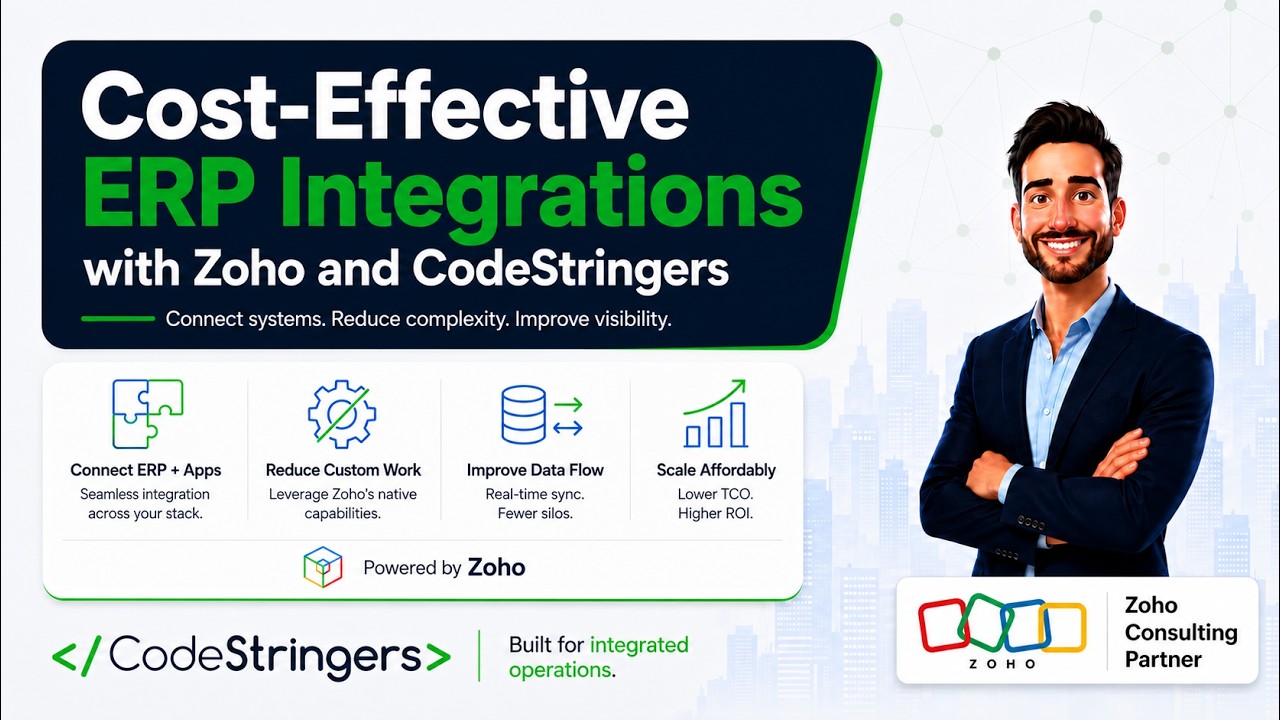
Cost-effective Zoho ERP integration.

ERP integration should not require choosing between an expensive enterprise platform and a pile of disconnected applications.

Integration4 min watchPerspective

In this video.

ERP integration should not mean choosing between an expensive enterprise platform and a pile of disconnected apps. Native integrations, Flow, APIs and custom connectors.

What this covers.

  • Link CRM, finance, inventory, e-commerce and service
  • The cheapest connector is not the cheapest architecture
  • Lower the cost of operating, not just of buying
Read the full video transcript.

The cheapest ERP connection is not always the most cost-effective. This video explains how Zoho and CodeStringers reduce total operating cost by choosing the right architecture, removing manual work, and avoiding unnecessary complexity. The real cost includes licenses, implementation, data cleanup, maintenance, manual entry, reporting delays, errors, and future rebuilding. A low-cost connector can become expensive when employees must complete the missing process every day. Zoho can connect CRM, finance, inventory, projects, service, documents, automation, and analytics within one broader platform. That can reduce separate subscriptions, vendors, and point-to-point integrations.

Use native integrations when they meet the requirement, Zoho Flow for configurable orchestration, APIs and custom functions for deeper control, and dedicated integration services only when complexity or scale requires them. Clear identifiers, field ownership, status definitions, and duplicate rules make integrations simpler and more dependable. Every unresolved inconsistency becomes business logic the company must pay to build and maintain. Prioritize workflows by frequency, time saved, error exposure, customer impact, and financial value. Start with high-volume transactions such as customer creation, orders, invoicing, inventory updates, and reporting. Reliable integrations detect missing data, prevent duplicates, retry temporary failures, alert the right owner, and support reconciliation.

Faster exception resolution means lower maintenance cost and fewer customer-facing problems. When CRM, finance, inventory, projects, and service share governed data, leadership no longer waits for manually assembled spreadsheets. One trusted dashboard creates quicker decisions with less administrative work. We map the business, identify the systems worth keeping, quantify the friction, prioritize the highest-return integrations, and select the least complex architecture that can reliably support the outcome. Schedule a complimentary ERP Integration Assessment. CodeStringers will help you reduce manual work, avoid overengineering, and build a connected Zoho operating system that delivers measurable value after go-live.

One Partner. Better Outcomes.

Questions people ask.

What does ERP integration really cost?

More than the connector. The real cost includes licenses, implementation, data cleanup, maintenance, manual entry that remains, reporting delays, errors and future rebuilding. A low cost connector becomes expensive when employees complete the missing part of the process by hand every day. The video's point is to lower the cost of operating the integration, not just the cost of buying it.

Which Zoho integration approach should you use?

The least complex one that reliably supports the outcome. Native integrations when they meet the requirement, Zoho Flow for configurable orchestration between applications, APIs and custom functions when deeper control is needed, and dedicated integration services only when complexity or scale requires them. Choosing the heaviest option first adds cost to build and maintain; choosing the lightest one that cannot do the job adds manual work.

Which workflows should be integrated first?

Prioritize by frequency, time saved, error exposure, customer impact and financial value. High volume transactions come first: customer creation, orders, invoicing, inventory updates and reporting. Before building, settle clear identifiers, field ownership, status definitions and duplicate rules, because every unresolved inconsistency becomes business logic the company pays to build and maintain.

What makes an integration reliable after go live?

It detects missing data, prevents duplicates, retries temporary failures, alerts the right owner when something fails and supports reconciliation between systems. Faster exception resolution means lower maintenance cost and fewer customer facing problems. When CRM, finance, inventory, projects and service share governed data, leadership stops waiting for spreadsheets assembled by hand and reads one trusted dashboard.

Integrated business solutions

One partner. Better outcomes.

We design, build, integrate and operate AI-driven, platform-agnostic integrated business solutions for operationally complex companies. Start with a conversation; we will tell you if we are a fit.