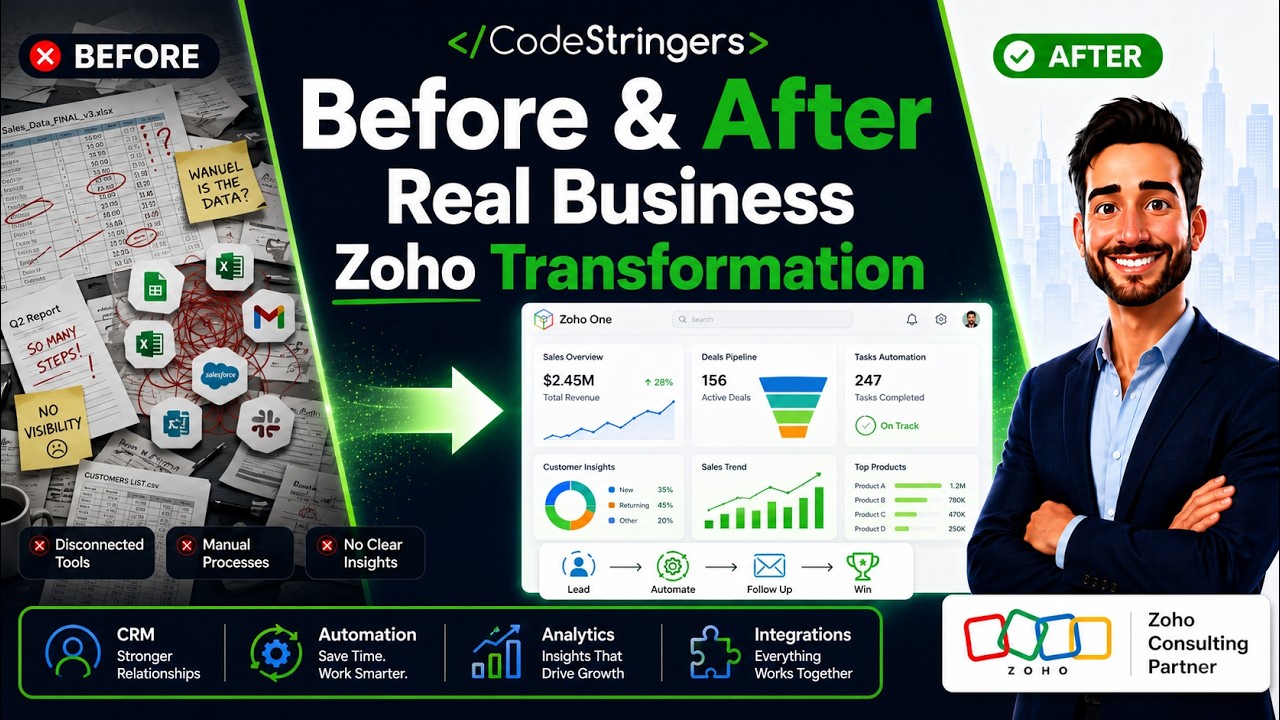
This is the story of a real business that told us it was operating at roughly ten percent efficiency. We used Zoho to turn disconnected tools, manual processes, and institutional memory into a guided transaction operating system. Deals lived across spreadsheets, email, shared folders, and the memories of the people involved. The information existed, but finding the latest status required searching, asking, and reconstructing what had already happened. Every transaction involved sellers, buyers, listings, agreements, confidential documents, marketing materials, diligence, and follow-up. Each handoff created another opportunity for delay, confusion, or a missed next step.
A basic CRM would have created contacts and opportunities. The business needed something more useful: a system that understood the transaction, guided the workflow, managed documents, tracked buyers, and showed what required attention. We structured people, listings, transactions, buyers, contracts, checklists, and settings inside Zoho. Each deal moved through a defined pipeline from pre-listing and agreements through outreach, diligence, purchase agreement, and closing. Zoho CRM, Writer, Sign, and WorkDrive connected document creation, signature, storage, and transaction folders. Agreements and deal materials stopped living outside the workflow and began helping move the deal forward.
The system considered stage changes, completed tasks, checklist activity, and meaningful updates. When a transaction lost momentum, it could flag the deal and explain who or what the team was waiting on. A dedicated buyer pipeline showed the buyer, transaction, stage, last contact, and next action. Matching logic helped identify relevant opportunities while the broker remained responsible for the judgment and relationship. At the start, the client estimated that he was operating at about ten percent efficiency. By the end, he said he was closer to seventy-five percent efficient at getting and closing deals—without replacing the people who made the business work.
A successful Zoho project should do more than organize records. It should create clarity, protect momentum, and make the business easier to run. Schedule a complimentary Business Systems Assessment and discover what your own before-and-after transformation could look like. One Partner. Better Outcomes.